Presence is the New Payment
The world of card present payments is undergoing its most radical transformation since the introduction of the EMV chip. As we move through 2026, the industry is shifting away from physical plastic and toward a “presence-based” economy where identity is the transaction.
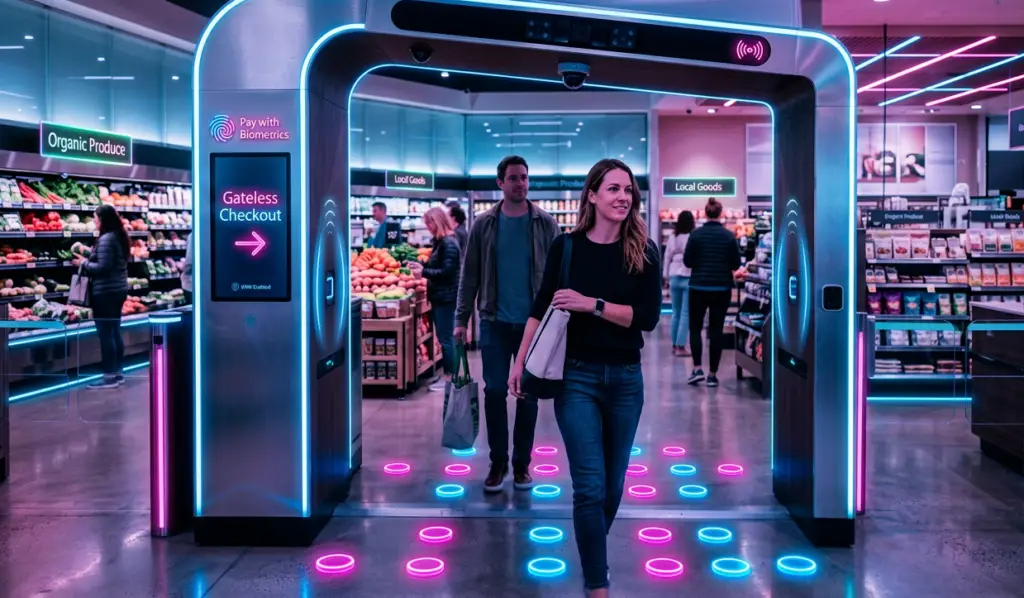
The next major innovation in card present payment technology is Biometric Checkout Systems, specifically those utilizing Palm Vein Recognition and Face-to-Pay protocols. Unlike traditional contactless payments that require a device (phone or card) to be tapped, these systems allow a consumer to complete a high-security transaction using only their biological signature.
The Rise of the Biological Wallet
Biometric payments are not merely a new “feature” but a fundamental re-architecture of the Point of Sale (POS). In 2026, leading processors like J.P. Morgan and Mastercard have moved beyond pilot programs into full-scale commercial deployments. These systems use near-infrared (NIR) light to map the unique internal vein patterns of a human palm or high-fidelity facial geometry.
The innovation lies in its “internal” nature. While fingerprints can be lifted from surfaces and faces can be spoofed with high-resolution images, palm vein structures are internal and require “liveness detection” to function. This makes them virtually impossible to counterfeit. For the merchant, this reduces “card-present” fraud to near-zero levels. For the consumer, it offers the ultimate convenience: the ability to walk into a store with nothing but their hands and walk out with their purchases.
SoftPOS: Turning Every Screen into a Terminal
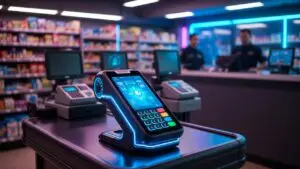
Parallel to the biometric boom is the maturation of SoftPOS (Software Point of Sale) or “Tap-to-Phone” technology. Historically, accepting a card-present payment required dedicated, proprietary hardware from companies like Verifone or Ingenico.
In 2026, any commercial off-the-shelf (COTS) device—a smartphone, a tablet, or even a smart mirror—can be transformed into a secure, EMV-compliant payment terminal via a simple app. This is powered by advanced kernel-level security that isolates the payment processing environment from the rest of the mobile operating system.
Ultra-Wideband (UWB) and “Hands-Free” Payments
The frontier beyond biometrics is Ultra-Wideband (UWB) technology. If you have ever used a digital car key that unlocks as you approach the vehicle, you have used UWB. In the payment space, 2026 marks the year that “Hands-Free” payments become a reality.
Unlike NFC (Near Field Communication), which requires a device to be within 4 centimeters of a reader, UWB has spatial awareness. It can pinpoint a customer’s location within a few centimeters from several meters away. This allows for a “walk-through” checkout experience:
- The Approach: The terminal detects the customer’s UWB-enabled smartphone as they enter the checkout zone.
- The Verification: The system securely handshakes with the device in the customer’s pocket.
- The Completion: The customer simply nods or gives a verbal “yes” to the cashier, and the transaction is processed without the phone ever leaving their pocket.
Comparison of Emerging Card Present Technologies
Technology | Primary Benefit | Security Level | Hardware Required |
Palm Vein | High speed, no device needed | Ultra-High (Internal) | Infrared Scanner |
SoftPOS | Zero hardware cost for merchants | High (App-based) | Any NFC Smartphone |
UWB | Hands-free, distance-based | High (Spatial) | UWB-enabled chip |
Face Pay | Seamless, “glance” interaction | High (Liveness) | 3D Camera |
The “Agentic” Shift
Finally, 2026 is seeing the introduction of Agentic Payments. This involves AI agents residing on a user’s device that can negotiate “card-present” discounts or loyalty redemptions in real-time at the moment of the tap.
Large Language Models (LLMs) integrated into mobile wallets now act as autonomous financial agents. When you approach a card-present terminal, your AI agent communicates with the merchant’s AI to:
- Negotiate Discounts: Apply the best possible coupon or loyalty points automatically.
- Route the Transaction: Choose the specific card in your wallet that offers the highest cashback for that specific merchant category.
- Verify Integrity: Cross-reference the merchant’s ID against global fraud databases in milliseconds before authorizing the “tap.”
The “card” is no longer a static credential; it is a dynamic participant in the transaction, choosing the most cost-effective routing or reward structure for the consumer automatically.
Summary of the Future
The next era of card-present technology is defined by the disappearance of the card itself. Whether through the internal map of our veins, the spatial precision of UWB, or the ubiquity of SoftPOS, the act of “paying” is moving from a conscious hurdle to a seamless, background event.
So card-present payments is not a new card, but the removal of the card entirely in favor of Biometric Presence and Spatial Awareness. We are moving toward a world where the act of paying is as natural and frictionless as a greeting.
References
- Checkout.com (2026). Top 9 Payment Trends for 2026.
- Mastercard (2025). The Future of Payments: Six Industry Trends Shaping 2026.
- J.P. Morgan (2025). Biometric Checkout Pilot: Results and Scaling.
- FiRa Consortium (2026). UWB Payment Project and Standardization.
- Fortune Business Insights (2026). Global SoftPoS Market Size and Forecast.